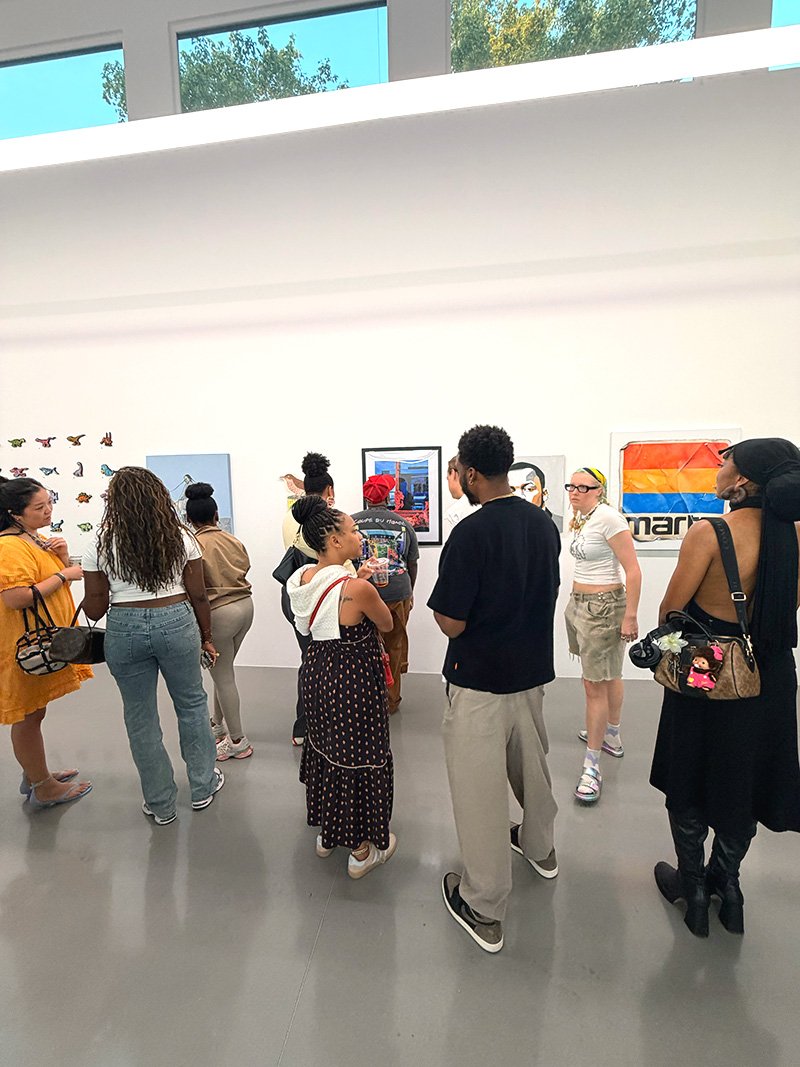
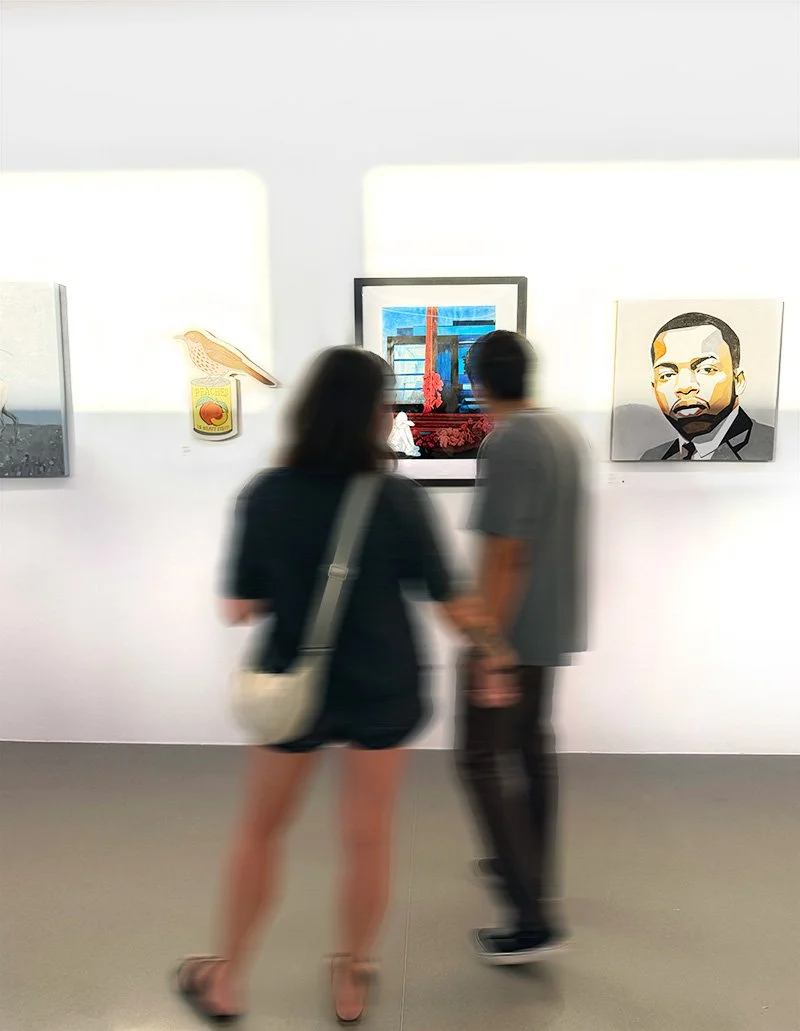
ABV Gallery: Locals Only Group Exhibition
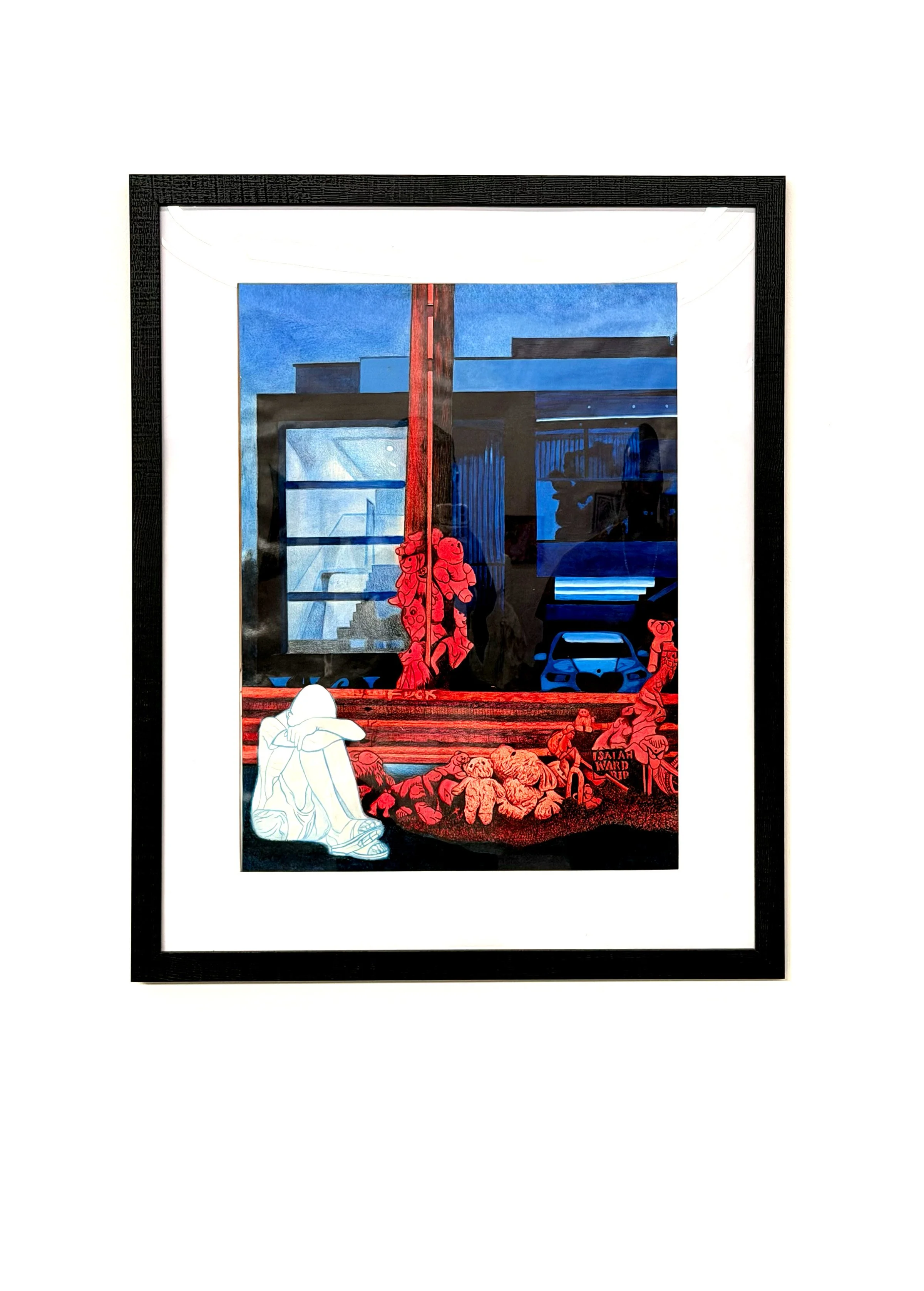
Don’t forget about the neighborhood
Mixed media on paper
18 x 24 inches
Don’t Forget About the Neighborhood examines gentrification, displacement, policing, and the erasure of community memory within historically low-income neighborhoods throughout Atlanta, Georgia. The work reflects on what happens when neighborhoods that have endured generations of hardship, loss, and resilience are rapidly transformed by new development, rising property values, and the arrival of wealthier communities.
At the center of the work is a memorial to a child. The collection of plush toys scattered across the foreground references a real child memorial, transforming objects typically associated with innocence, comfort, and childhood into reminders of grief and loss. Among these objects sits the ghostly figure of a child, appearing almost translucent against the environment. The spirit becomes a haunting presence within the neighborhood, a representation of a life that has been lost, but also of the memories and histories that remain embedded within a place long after the people connected to them are gone.
The child can be interpreted as both an individual spirit and a larger metaphor for the innocence and lives of communities that can become casualties of systemic neglect and neighborhood transformation. Their presence asks the viewer to consider what happens to the people who are left behind, forgotten, or displaced as the physical environment around them changes.
The surrounding architecture creates a stark contrast to the memorial. Modern homes, commercial structures, vehicles, and increasingly developed spaces encroach upon the remnants of the neighborhood. The polished and imposing architecture represents the physical manifestation of Atlanta's rapid growth, while the memorial represents the human histories that existed before these developments arrived. Rather than presenting gentrification as simply a change in architecture, the work emphasizes its consequences on real people, families, and generations.
The red and blue palette further introduces a sense of policing and surveillance. These colors recall emergency and police lights, creating an atmosphere of tension and unease. Within many historically marginalized neighborhoods, policing can become another visible force shaping how residents experience their environment. The work therefore places development and policing within the same visual space, suggesting a complicated relationship between the systems that govern, monitor, and ultimately transform these communities.
The memorial itself interrupts this increasingly modern landscape. The plush toys feel vulnerable against the hard architectural surfaces surrounding them, emphasizing the contrast between human vulnerability and urban development. They also function as evidence. These objects are remnants of someone who was here, someone who mattered, and someone whose memory continues to occupy the space. The ghostly child reinforces this idea: although the physical landscape may change, memory cannot simply be demolished or redeveloped.
The work asks what happens when a neighborhood's history is gradually bulldozed, not only literally through construction, but culturally through rising costs, displacement, changing demographics, and the erasure of the stories belonging to the people who lived there first. The new homes and structures may represent investment and progress, but the work questions who that progress is actually for and what is sacrificed in the process.
Ultimately, Don’t Forget About the Neighborhood is a meditation on memory, grief, displacement, and the human cost of a rapidly changing city. The title serves as both a warning and a plea. It asks viewers not to forget the families who built these communities, the hardships they endured, the children who were lost, and the histories that remain embedded within the streets.
A neighborhood is not simply the buildings that occupy it. It is the people, memories, losses, traditions, and generations that give those buildings meaning. Even when the physical landscape is transformed, the spirits of what came before remain.